
Winter Activities for Preschool and Kindergarten
By the Clipart Scout team8 min read
Short answer
Good winter activities for preschool and kindergarten (ages 3 to 6) use cold, ice, clothes and animals as the theme. Try an ice-melting race, a mitten matching game, a winter animal sorting game and indoor movement games such as penguin walks and snow angels on the carpet. Keep each activity to ten or fifteen minutes and use things from your kitchen.
Key points
- Ice and water give you real science with a bowl, a tray and a few household things.
- Mittens, hats and coats make natural sorting, matching and counting games.
- Winter animals are a story topic: some sleep, some travel, some stay active.
- Movement games help on indoor days. Clear the floor and keep the rules to one or two.
- Where there is no snow, use ice cubes, cotton balls or white paper and the same activities work.
On this page
Winter can feel long in a preschool room, especially when it is too cold, wet or dark to go out. The good news is that winter is a ready-made theme: ice melts, mittens come in pairs and animals do surprising things in the cold. None of it needs a holiday.
This guide gives winter activities for preschool and kindergarten (ages 3 to 6) in five groups: ice and snow science, winter animals, mittens and clothes, indoor movement and a calm winter corner. A table by age and a five-day theme week come after them. If you are planning December as well, see our guide to Christmas activities for preschool.
What snow and ice science can preschoolers try?
Preschoolers can learn a lot from watching ice change, using a tray, a few bowls and some patience. The aim is to look closely and say what they see, not to get the “right” answer.
Ice melting race. Freeze water in a muffin tin to make six cubes. Put one in a bowl in the sun, one on a plate, one in a bowl of warm water, one in a bowl of cool water, one in a cup wrapped in a towel and one in a cup wrapped in plastic wrap. Ask the children to guess which will melt first, then check every few minutes.
Mitten or sock? Wrap an ice cube in a mitten, a sock and a bit of paper, and hold one bare in the palm. Which melts first? Let the child feel the cold on the hand, and stop if it is uncomfortable.
Frozen treasure. Freeze a large plastic toy in a tub of water. Children melt it by pouring warm water from a cup. Use only large toys, since the CPSC says small parts are a choking hazard for children under 3. Supervise throughout.
Salt and ice. Put two ice cubes on a plate. Sprinkle a little salt on one and leave the other alone. Check after a few minutes and talk about what changed. Do not let children taste anything.
Ice painting. Freeze colored water in a muffin tin with a craft stick in each cup. Children draw on paper with the ice and watch the colors run.
No snow? No problem. Where it does not snow, use ice cubes and crushed ice. For “snow” on a tray, use cotton balls or tear white paper into small pieces. The same activities work, and children enjoy the pretend.
Safety note: Children should not put ice in the mouth during these activities, and anyone who still tastes everything should skip the ice games. Stop cold-water play when hands get red or uncomfortable, and keep a towel nearby.
What winter animal activities work for preschool?
Winter animal activities work best as stories and sorting games, because the main idea is simple: in the cold, different animals do different things. Some sleep through the cold months, some travel to warmer places and some stay active and keep warm with thick fur or feathers.
Three homes sort. Draw or print pictures of four to six animals, such as a bear, a goose, a rabbit and a fox. Make three sheets: sleeps through winter, goes away, stays and keeps warm. Ask children to sort the pictures and say why. What animals do depends on the country, so check each one in a book from your own area first.
Be the animal. Children curl up as sleeping bears, flap as birds flying away and tiptoe as foxes in the snow. Call the animal and the action. Each lasts a minute.
Window watching. Tape a paper chart to a window with pictures of three or four birds you might see. Children make a tally mark each time one lands. Check in the morning and at lunch.
Warm coats. Show children a picture of a fluffy animal and ask what keeps it warm. Then hold up a coat and ask what keeps a child warm. The CDC 4-year list includes answering simple questions like “What is a coat for?”, so this is a good fit for 4-year-olds.
What can you do with mittens, hats and winter clothes?
Winter clothes give children ready-made matching, sorting and counting games. Each one uses real mittens or paper cut-outs.
- Match the pair. Mix up six to ten mittens and ask children to find the matching pair. Add one odd mitten to make a puzzle.
- Mitten count. Put mittens in a row and count them. For ages 5 and 6, count in twos: two, four, six. The CDC 5-year list includes counting to 10.
- Pattern mittens. Cut paper mittens and ask children to decorate each pair with the same pattern. Stripes, dots or zigzags all work.
- Dress the snowman. Draw a snowman and cut out a hat, scarf and buttons from colored paper. Children decide what goes where and name the colors.
- Weather and what to wear. Hold up a picture of a sunny, snowy or rainy day and ask what you should put on. A child can pick a card from a pile of clothes.
- Real dressing practice. Give each child a coat and a pair of mittens, and let them practice getting them on. The CDC 3-year list includes putting on some clothes by himself, such as loose pants or a jacket. Be patient with zips and thumbs.
What indoor movement games work on a cold day?
Indoor movement games use big movements and short rules, and they burn energy on days when no one can go outside. Clear a space on the floor first and take away anything hard or sharp.
- Penguin waddle. Children walk with their feet apart and their arms stiff at their sides. Race across the room in slow motion.
- Polar bear crawl. Children crawl on hands and feet, with their back flat and their head up.
- Snow angels on the carpet. Children lie on their backs and move arms and legs in and out. Count to ten as they do it.
- Snowball toss. Scrunch scrap paper into balls. Children throw them into a basket, or catch a soft one. The CDC 4-year list includes catching a large ball most of the time, so allow lots of drops.
- Hop through the snow. Place paper circles on the floor as snow patches. Children hop from one to the next. The CDC lists hopping on one foot at age 5, so let younger children jump with two feet.
- Skating on socks. Where the floor is smooth and clear, children slide gently on socks. Keep the group small and ask for slow movements.
- Freeze and thaw. Play music. When it stops, everyone freezes. When it starts again, they thaw.
What winter activities suit each age?
Choose one activity per age band and let the children repeat it. A familiar activity done twice usually goes better than a new one every day.
| Age | Good activities | Skill source |
|---|---|---|
| 3 | Ice painting, mitten matching, penguin waddle, snowball toss | CDC 3-year list: strings large beads, puts on some clothes |
| 4 | Ice melting race, three homes sort, dress the snowman, hop through the snow | CDC 4-year list: catches a large ball, names a few colors |
| 5 to 6 | Mitten count in twos, window watching chart, salt and ice, weather and what to wear | CDC 5-year list: counts to 10, pays attention for 5 to 10 minutes |
For attention, the CDC 5-year list says children pay attention for 5 to 10 minutes during activities like story time or crafts, so plan short sessions and change often.
How do you plan a winter theme week?
A winter theme week works best with one idea per day and a short chant or song every morning. Repeat the same circle time greeting each day so children feel the rhythm.
| Day | Focus | Activities |
|---|---|---|
| Monday | Ice and snow | Ice melting race, mitten or sock |
| Tuesday | Winter animals | Three homes sort, be the animal |
| Wednesday | Clothes | Match the pair, dress the snowman |
| Thursday | Movement | Penguin waddle, snow angels, hop through the snow |
| Friday | Calm | Ice painting, window watching, a winter story |
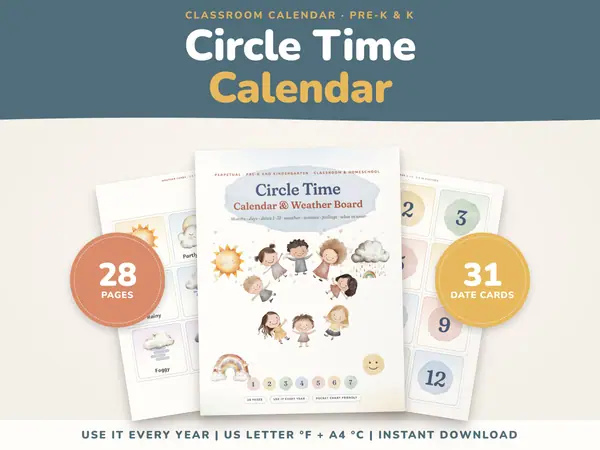
If you want ready pages for circle time, the Circle Time Calendar Printable has 28 pages, including 9 weather cards, 5 temperature cards, 12 clothing cards for “What should we wear?” and a season wheel.
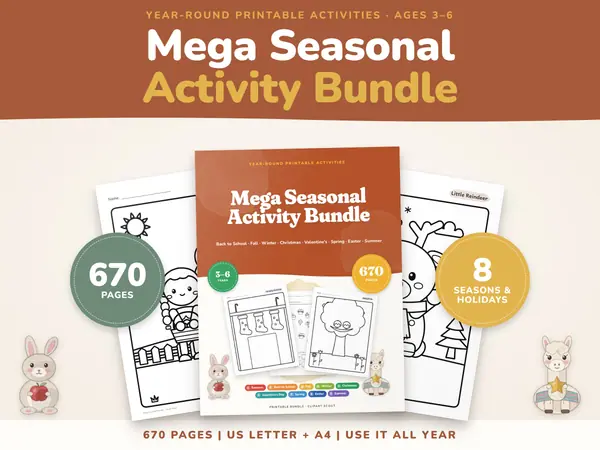
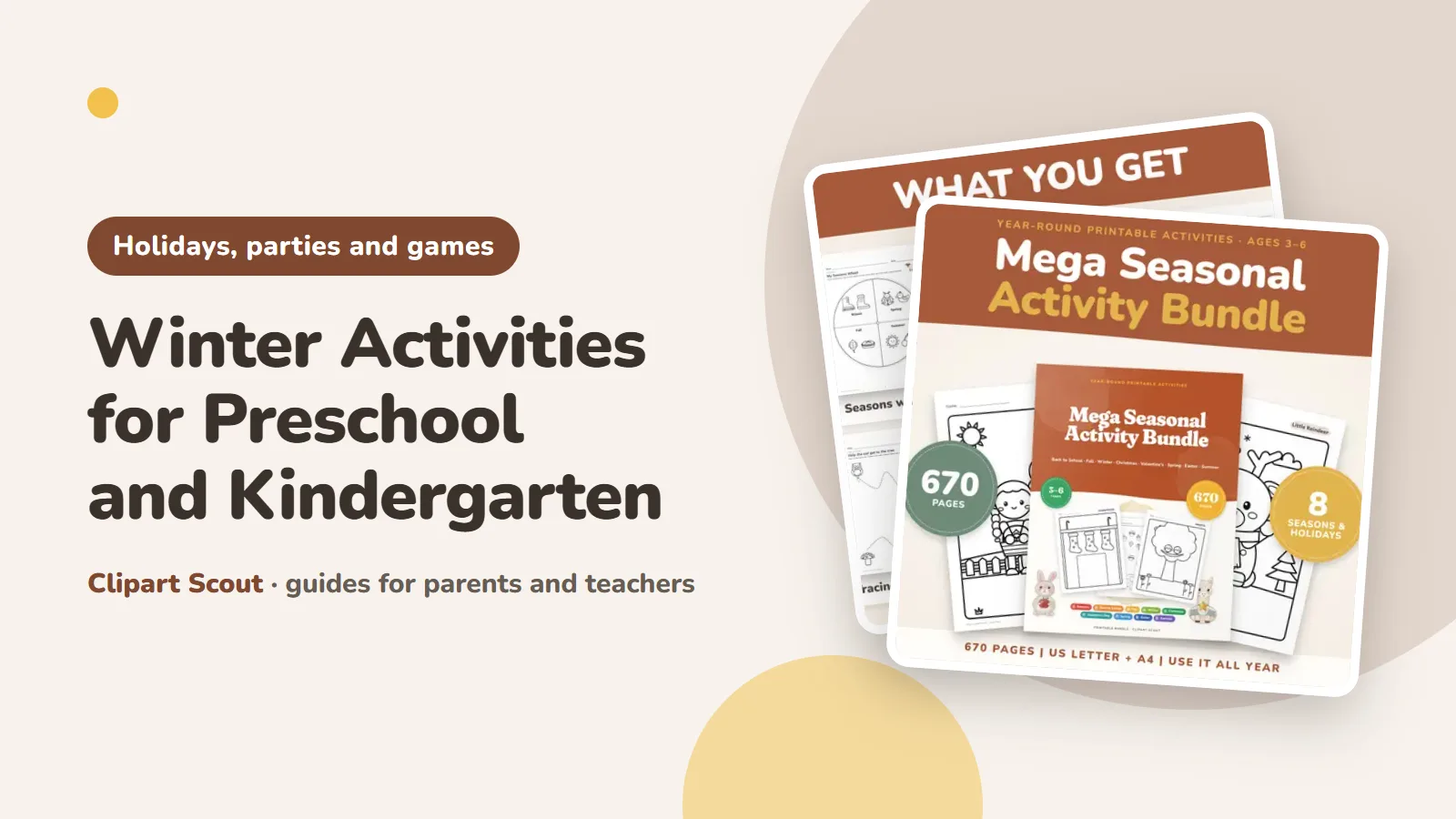
For more winter pages, the Seasonal Preschool Activities Bundle has 670 pages for ages 3 to 6, with Winter as one of its nine seasonal sections.
Our guide to fine motor activities by age has more ideas for small hands that fit a winter week.
What to do next
- Pick one activity from each group and put them in a five-day plan.
- Freeze your ice cubes the night before. Muffin tins work well.
- Gather mittens, a few cushions and a basket for the snowball toss.
- Check for children who put things in the mouth, and keep ice and small parts away from them.
- See our preschool at home guide for a routine around the week, and the preschool printables and holiday and seasonal printables for ready pages.
Sources
- CDC milestones: 3 years, 4 years and 5 years, Centers for Disease Control and Prevention.
- Small Parts for Toys and Children's Products, U.S. Consumer Product Safety Commission.
This guide is general information for parents and teachers. It is not medical, legal or professional advice. The sources are listed above. More about our guides is on the About page.