English Games for Kids: 20 Easy Activities for Home and Class
By the Clipart Scout team6 min read
Short answer
Games suit English learning because children learn naturally when they are having fun, the British Council says, and Cambridge English says games give children a low-pressure way to use English. Keep each game short, repeat favorites, use the same phrases each time and let shy children join in without speaking at first. This guide gives 20 games that need little or no preparation.
Key points
- The British Council says children learn naturally when they are having fun. Cambridge English says games are a low-pressure way to use English.
- Many of the 20 games need no materials. Most need only paper, crayons or a few household objects.
- Match each game to a word list, such as colors, animals, body words or action verbs, so the English is clear.
- A shy child can join in by pointing, moving or listening first. Let the child decide when to speak.
- Keep games short. The British Council says short, frequent sessions are better than long ones.
On this page
Children learn English best when they enjoy it, and a game is an easy way to repeat the same words many times. The short answer is to choose a short game, say the key phrases clearly and play it again on another day.
This guide opens with what the British Council and Cambridge English say about games. Then it gives 20 games, a table that links each topic to a word list, and advice for a shy child. All the games are our suggestions. Our printables are in English.
Why use games to teach English?
The British Council says, “Children learn naturally when they are having fun.” It also says repetition is essential, and that children need to say words many times to remember them, so parents should not be afraid to repeat games. It names flashcards as a way to teach and revise vocabulary.
Cambridge English says, “Games create opportunities for children to use English in a fun, low-pressure environment.” Its booklet for parents lists ideas such as “I spy”, drawing pictures and posters with labels, and making a list of things to find on a walk.
What are 20 easy English games?
For each game you will see what it practices, what you need and how to play. The line in quotes is the English the child hears or says.
Games that need no materials
- Simon says. Practices body words and action verbs. Need nothing. Say “Simon says touch your nose.” The child does it only after “Simon says”. Child says: “Nose.”
- I spy with colors. Practices colors. Need nothing. Say “I spy something blue.” The child looks and guesses. Child says: “The door is blue.”
- What is missing? Practices any word list. Need five objects. The child closes eyes, you take one away. Child says: “The ball is missing.”
- Mirror. Practices actions. Need nothing. You do an action, the child copies it and says the word. Child says: “Jump.”
- Yes or no. Practices animals. Need nothing. Say “A dog can fly.” The child says “No” or “Yes”. Child says: “No, a dog can run.”
Movement games
- Touch something blue. Practices colors. Need objects in the room. Say a color, and the child touches it. Child says: “Blue.”
- Jump to the number. Practices numbers. Need number cards on the floor. Say “Jump to five.” Child says: “Five.”
- Freeze dance. Practices action verbs. Need music. When the music stops, say an action. Child says: “Dance.”
- Where is the ball? Practices place words. Need a ball and a box. Put the ball in, on, under or next to the box. Child says: “The ball is under the box.”
- Animal moves. Practices animals and actions. Need nothing. Walk like a duck, jump like a frog. Child says: “I am a frog.”
Card and paper games
- Memory pairs. Practices any list. Need two sets of picture cards. Turn them face down and find pairs. Child says: “Cat. Cat.”
- Bingo. Practices numbers or colors. Need paper grids. Call a word, the child marks it. Child says: “Bingo!”
- Sorting. Practices animals or colors. Need cards and two boxes. Sort farm and wild animals. Child says: “A cow is a farm animal.”
- Draw and label. Practices any words. Need paper and crayons. The child draws and adds a word. Child says: “This is a sun.”
- Story strips. Practices sequence. Need a short story cut into pieces. Put the pieces in order. Child says: “First, then.”
Speaking games
- Shop. Practices numbers and food. Need toy items. One child is the shop keeper. Child says: “Two apples, please.”
- Guess the animal. Practices animals. Need nothing. Give hints: “It is big. It has a long nose.” Child says: “An elephant.”
- Introduce the puppet. Practices greetings. Need a soft toy. The puppet says hello and asks a name. Child says: “My name is …”
Games for a class of 20 or more
- Class bingo. Use a word list on the board. Children draw their own grid and write words in it. Groups of four check each other.
- Pass the ball. Children stand in a circle. The one who gets the ball says a word from a topic, then passes it. Use clear rules: one word, no repeats.
Some of these games ask children to hold small objects. If your child is very young or still puts things in their mouth, keep small items away and stay close.
Which games match which word lists?
Use this table to choose a game, then open the word list for the words and pictures.
| Topic | Games | Word list |
|---|---|---|
| Colors | 2, 6, 12 | colors in English |
| Numbers | 7, 12, 16 | numbers 1 to 100 in English |
| Animals | 5, 10, 13, 17 | animals in English |
| Body words | 1, 4 | parts of the body in English |
| Action verbs | 1, 4, 8, 10 | action verbs for kids |
| Place words | 9 | prepositions of place |
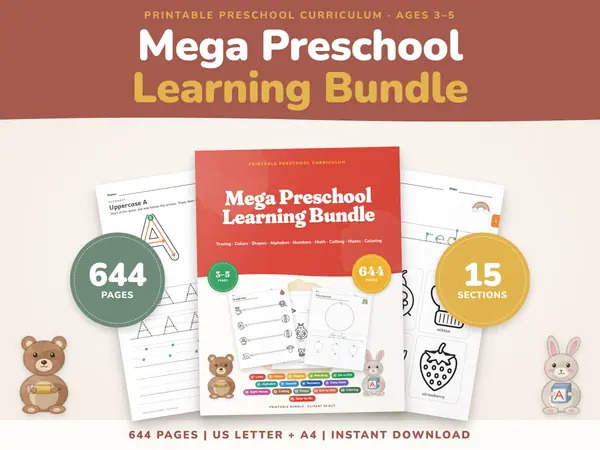
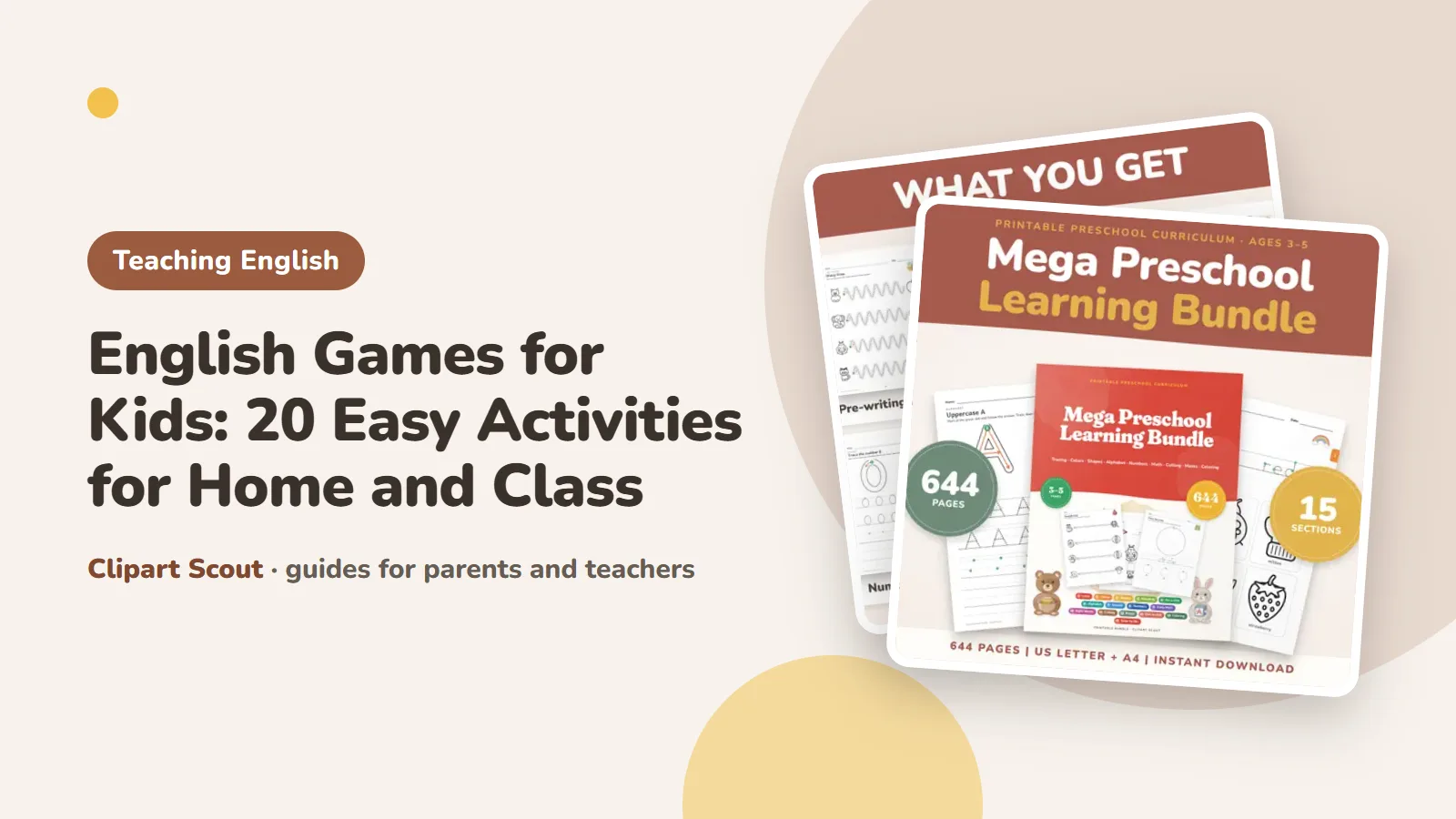
The Preschool Worksheets Bundle has 644 pages, with sections on colors, shapes, matching and numbers 0 to 20, and it suits children aged 3 to 5. It can give you cards and pages for games 11 to 14.
What if the child is shy?
Do not push a shy child to speak. Cambridge English lists “Allowing them to decide when they’re ready to speak” among ways to help a child feel confident. Its parents’ booklet says, “Accept mistakes.” The British Council says that during a silent period, parents should not force children to repeat words.
Here are some suggestions of our own. Let the child point, move or sort cards. Play games where you do the talking, such as Simon says. Use a puppet, since some children speak to a toy first. Praise effort, not only right answers. The British Council says children respond well to praise and encouragement.
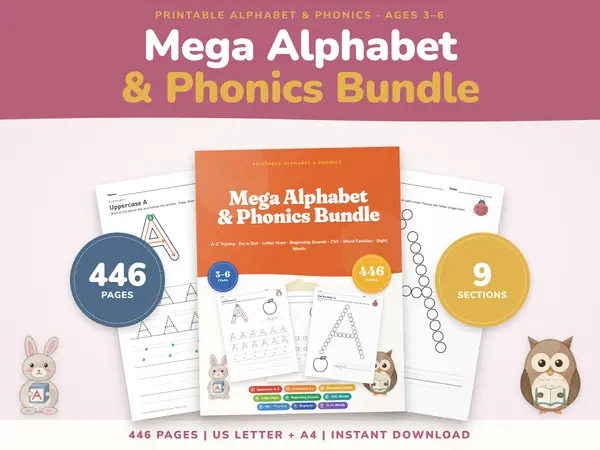
The Alphabet Worksheets and Phonics Bundle has 446 pages, with Letter Hunt and Beginning Sounds sections that work well as quiet games.
How long should a game last, and what should you keep in a games box?
Keep each game to a few minutes. The British Council says short, frequent sessions are better than long ones, and that fifteen minutes is enough for very young children. Play two or three short games in one session and finish while your child still wants more.
Keep these in a box, and tick them off:
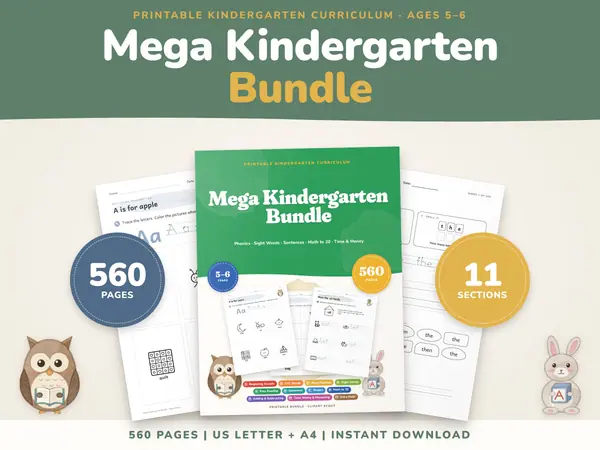
If you want printed pages for these games, the Kindergarten Worksheets Bundle has 560 pages in 11 sections, including Beginning Sounds, CVC Words and Sight Words.
What to do next
- Choose three games from this list and write them down.
- Pick one word list to go with them.
- Play one game a day for a week, for five to ten minutes.
- Add a new game when your child asks to play the old one again.
- Read how to teach English to kids at home for a full plan, and how to teach the English alphabet for letters. You can also browse our kindergarten worksheets.
Sources
- How to start teaching kids English at home, British Council, LearnEnglish Kids.
- How children learn, British Council, LearnEnglish Kids.
- How to practise English at home, Cambridge English.
- How to help your child learn English, Cambridge English.
This guide is general information for parents and teachers. It is not medical, legal or professional advice. Every guide lists its sources at the end. More about our guides is on the About page.