Numbers 1 to 100 in English: Spelling and Pronunciation
By the Clipart Scout teamUpdated 103 words
Short answer
The English numbers from 1 to 12 are single words to learn by heart: one, two, three, four, five, six, seven, eight, nine, ten, eleven, twelve. From 13 to 19 the words end in -teen, and the tens from 20 to 90 end in -ty. Numbers such as 21 or 47 join the ten and the unit with a hyphen: twenty-one, forty-seven. 100 is one hundred.
This page lists every number from 0 to 100 in English, in digits and in words, with its pronunciation. Tap the speaker button to hear a number. Below the list you will find the ordinal numbers (first, second, third), a quick practice, ways to teach numbers to children and the mistakes that come up most often.
Children do not need all one hundred numbers at once. Teach 1 to 10 first, then 11 to 20, then the tens (20, 30, 40). After that, every other number is built from words the child already knows.
Word list
0 to 10
11 to 20
21 to 100
- 21twenty-one/ˈtwenti wʌn/
- 22twenty-two/ˈtwenti tuː/
- 23twenty-three/ˈtwenti θriː/
- 24twenty-four/ˈtwenti fɔːr/
- 25twenty-five/ˈtwenti faɪv/
- 26twenty-six/ˈtwenti sɪks/
- 27twenty-seven/ˈtwenti ˈsevən/
- 28twenty-eight/ˈtwenti eɪt/
- 29twenty-nine/ˈtwenti naɪn/
- 30thirty/ˈθɜːrti/
- 31thirty-one/ˈθɜːrti wʌn/
- 32thirty-two/ˈθɜːrti tuː/
- 33thirty-three/ˈθɜːrti θriː/
- 34thirty-four/ˈθɜːrti fɔːr/
- 35thirty-five/ˈθɜːrti faɪv/
- 36thirty-six/ˈθɜːrti sɪks/
- 37thirty-seven/ˈθɜːrti ˈsevən/
- 38thirty-eight/ˈθɜːrti eɪt/
- 39thirty-nine/ˈθɜːrti naɪn/
- 40forty/ˈfɔːrti/
- 41forty-one/ˈfɔːrti wʌn/
- 42forty-two/ˈfɔːrti tuː/
- 43forty-three/ˈfɔːrti θriː/
- 44forty-four/ˈfɔːrti fɔːr/
- 45forty-five/ˈfɔːrti faɪv/
- 46forty-six/ˈfɔːrti sɪks/
- 47forty-seven/ˈfɔːrti ˈsevən/
- 48forty-eight/ˈfɔːrti eɪt/
- 49forty-nine/ˈfɔːrti naɪn/
- 50fifty/ˈfɪfti/
- 51fifty-one/ˈfɪfti wʌn/
- 52fifty-two/ˈfɪfti tuː/
- 53fifty-three/ˈfɪfti θriː/
- 54fifty-four/ˈfɪfti fɔːr/
- 55fifty-five/ˈfɪfti faɪv/
- 56fifty-six/ˈfɪfti sɪks/
- 57fifty-seven/ˈfɪfti ˈsevən/
- 58fifty-eight/ˈfɪfti eɪt/
- 59fifty-nine/ˈfɪfti naɪn/
- 60sixty/ˈsɪksti/
- 61sixty-one/ˈsɪksti wʌn/
- 62sixty-two/ˈsɪksti tuː/
- 63sixty-three/ˈsɪksti θriː/
- 64sixty-four/ˈsɪksti fɔːr/
- 65sixty-five/ˈsɪksti faɪv/
- 66sixty-six/ˈsɪksti sɪks/
- 67sixty-seven/ˈsɪksti ˈsevən/
- 68sixty-eight/ˈsɪksti eɪt/
- 69sixty-nine/ˈsɪksti naɪn/
- 70seventy/ˈsevənti/
- 71seventy-one/ˈsevənti wʌn/
- 72seventy-two/ˈsevənti tuː/
- 73seventy-three/ˈsevənti θriː/
- 74seventy-four/ˈsevənti fɔːr/
- 75seventy-five/ˈsevənti faɪv/
- 76seventy-six/ˈsevənti sɪks/
- 77seventy-seven/ˈsevənti ˈsevən/
- 78seventy-eight/ˈsevənti eɪt/
- 79seventy-nine/ˈsevənti naɪn/
- 80eighty/ˈeɪti/
- 81eighty-one/ˈeɪti wʌn/
- 82eighty-two/ˈeɪti tuː/
- 83eighty-three/ˈeɪti θriː/
- 84eighty-four/ˈeɪti fɔːr/
- 85eighty-five/ˈeɪti faɪv/
- 86eighty-six/ˈeɪti sɪks/
- 87eighty-seven/ˈeɪti ˈsevən/
- 88eighty-eight/ˈeɪti eɪt/
- 89eighty-nine/ˈeɪti naɪn/
- 90ninety/ˈnaɪnti/
- 91ninety-one/ˈnaɪnti wʌn/
- 92ninety-two/ˈnaɪnti tuː/
- 93ninety-three/ˈnaɪnti θriː/
- 94ninety-four/ˈnaɪnti fɔːr/
- 95ninety-five/ˈnaɪnti faɪv/
- 96ninety-six/ˈnaɪnti sɪks/
- 97ninety-seven/ˈnaɪnti ˈsevən/
- 98ninety-eight/ˈnaɪnti eɪt/
- 99ninety-nine/ˈnaɪnti naɪn/
- 100one hundred/wʌn ˈhʌndrəd/
Big numbers
- 1,000one thousand/wʌn ˈθaʊzənd/
- 1,000,000one million/wʌn ˈmɪljən/
Ordinal numbers: first, second, third
- 1stfirst
- 2ndsecond
- 3rdthird
- 4thfourth
- 5thfifth
- 6thsixth
- 7thseventh
- 8theighth
- 9thninth
- 10thtenth
- 11theleventh
- 12thtwelfth
- 13ththirteenth
- 14thfourteenth
- 15thfifteenth
- 16thsixteenth
- 17thseventeenth
- 18theighteenth
- 19thnineteenth
- 20thtwentieth
- 21sttwenty-first
- 22ndtwenty-second
- 23rdtwenty-third
- 24thtwenty-fourth
- 25thtwenty-fifth
- 26thtwenty-sixth
- 27thtwenty-seventh
- 28thtwenty-eighth
- 29thtwenty-ninth
- 30ththirtieth
- 31stthirty-first
- 40thfortieth
- 50thfiftieth
- 60thsixtieth
- 70thseventieth
- 80theightieth
- 90thninetieth
- 100thone hundredth
Practice on screen
Look at the picture or number and choose the right English word. Ten questions each round.
How to teach it
1. Count real things every day
Count stairs, spoons, toy cars or steps to the door, out loud and in English. Touch or move each thing as you say its number, so the child links one number word to one object. Two minutes a day is plenty to begin with.
2. Teach 1 to 10 before anything else
Stay with 1 to 10 until the child can say them in order, backwards and when you point to a digit at random. A number line on the wall or a set of ten cards helps: hold up a card and ask, "What number is it?"
3. Show how the tens and units fit together
Write 20, 30, 40 and so on in one row and 1 to 9 in another. Pick one from each row and say the number together: forty and three make forty-three. Children enjoy seeing that a few words can build every number up to 99.
4. Clap the difference between -teen and -ty
Thirteen and thirty sound alike to a learner. Say them in pairs and clap on the strong part: thir-TEEN, THIR-ty; four-TEEN, FOR-ty. Then say one of the two and let the child point to 13 or 30.
5. Play number games
Bingo with numbers, hopscotch, "What is missing?" with a row of number cards, or a shop game with pretend prices all give a reason to say and hear numbers many times without it feeling like a drill.
6. Write the words, not only the digits
Once the child reads a little, match digit cards to word cards (8 and eight), then copy the words. Tracing and writing number words is a good way to fix the spellings that are not regular, such as eight, twelve and forty.
Common mistakes
Writing "fourty" instead of forty
Four and fourteen keep the letter u, but forty does not. The same kind of change happens with five: fifteen and fifty, not "fiveteen" or "fivety".
Mixing up thirteen and thirty
The numbers 13 to 19 end in -teen and carry the stress at the end. The tens end in -ty and carry the stress at the start. When a learner cannot hear the difference, say the number slowly and show the digits.
Leaving out the hyphen
Numbers from 21 to 99 that are made of a ten and a unit are written with a hyphen: twenty-one, thirty-five, ninety-nine. Round tens and hundreds have no hyphen: twenty, one hundred.
Spelling eight, twelve and ninety by sound
Eight has a silent gh, and eighteen and eighty have only one t. Twelve ends in -lve. Ninety keeps the e of nine, but ninth drops it. These are spellings to copy and practice, not to work out.
Saying "one hundred one" or "one hundred and one"
Both are used. British English puts "and" after hundred: one hundred and one. American English often leaves it out: one hundred one. Choose one way for your lessons and keep to it.
Printables that go with this topic
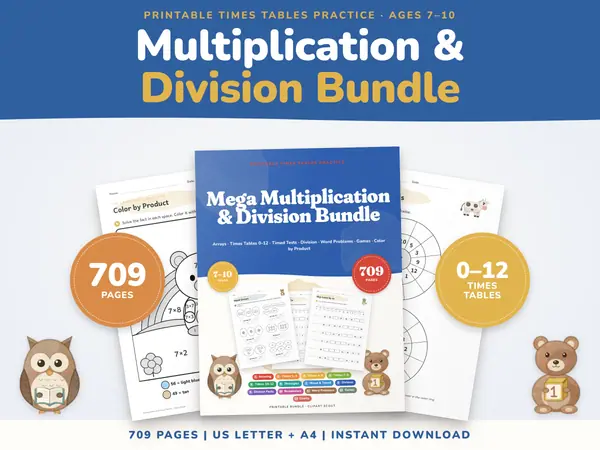
Multiplication Worksheets Bundle
709 pagesUS Letter + A43rd grade & 4th gradeEnglish
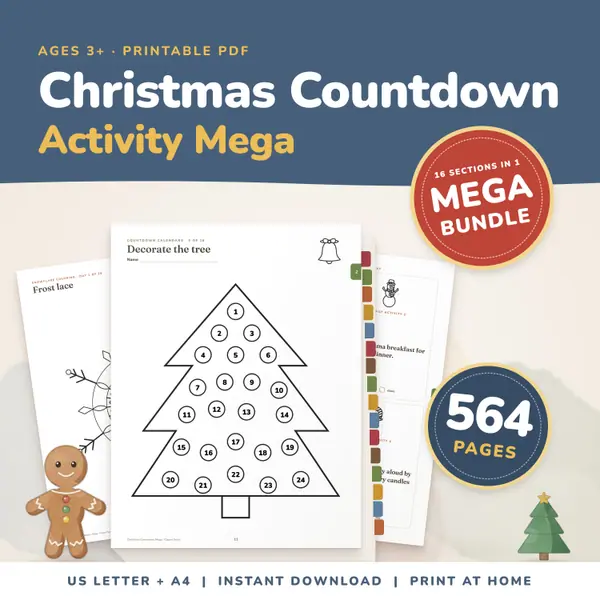
See price and buy on EtsyChristmas Countdown Activity Mega Bundle
564 pagesUS Letter + A4Teens & adultsEnglish
See price and buy on Etsy
Questions and answers
How do you spell the numbers from 1 to 20 in English?
One, two, three, four, five, six, seven, eight, nine, ten, eleven, twelve, thirteen, fourteen, fifteen, sixteen, seventeen, eighteen, nineteen, twenty.
Is it forty or fourty?
It is forty. The number 4 is four and 14 is fourteen, both with a u, but 40 is spelled forty, without the u.
Do English numbers need a hyphen?
Yes, for the numbers from 21 to 99 that have a ten and a unit: twenty-one, forty-two, ninety-nine. The tens on their own (twenty, thirty) and one hundred are written without a hyphen.
What are ordinal numbers?
Ordinal numbers give the order of things: first, second, third, fourth and so on. Most are made by adding -th to the number (sixth, tenth), but first, second, third, fifth, eighth, ninth and twelfth are irregular. They are used for dates, such as the third of May.
In what order should I teach numbers to a child?
A common order is 1 to 10 first, then 11 to 20, then the tens up to 100, and last the numbers in between. Counting real objects every day helps more than reciting a long list.
More English vocabulary
- English Alphabet for Kids: Letter Names and Words
- Colors in English: Names and Pronunciation for Kids
- Shapes in English for Kids: Names and Pronunciation
- Days of the Week in English: Order and Spelling
- Months of the Year and Seasons in English for Kids
- Telling the Time in English: Clock Words for Kids
- Animals in English for Kids: Names and Plurals
- Fruits and Vegetables in English for Kids
- Food and Drinks in English for Kids: Word List
- Parts of the Body in English for Kids
- Family Words in English for Kids: Members and Plurals
- Clothes in English: Words and Pronunciation for Kids
- Classroom Objects in English: School Words for Kids
- Rooms and Furniture in English: House Words for Kids
- Transport in English: Vehicle Words for Kids
- Feelings in English: Emotion Words for Kids
- Weather Words in English: Vocabulary for Kids
- Action Verbs for Kids: Common English Verbs
- Opposites in English: Word Pairs for Kids
- Prepositions of Place in English: In, On, Under
- English Greetings and Classroom Phrases for Kids
- Question Words in English: Who, What, Where, Why
Link to this page
Teachers and parents are welcome to link to this page. Copy the address or the ready-made link.