Weather Words in English: Vocabulary and Examples for Kids
By the Clipart Scout teamUpdated 19 words
Short answer
Common weather words in English are sunny, rainy, cloudy, windy, snowy, stormy, foggy, hot, cold, warm and cool, and the nouns sun, rain, snow, wind, cloud and storm. To talk about the weather, start with It: It is sunny. It is cold. The question is What is the weather like? Do not say I am sunny or it makes sun.
This page lists the weather words that children use every day: describing words such as sunny and windy, and the nouns behind them, such as sun and wind. Each word has its pronunciation and a short example sentence. Tap the speaker button to hear it.
Below the list you will find a quick practice, ideas for teaching weather words at home or in class, and the mistakes learners make most often, such as it is raining and it is rainy, weather and whether, and hot and warm.
Word list
Weather words
| Listen | English | Example |
|---|---|---|
| ☀️ | sunny/ˈsʌni/ | It is sunny today. |
| 🌧️ | rainy/ˈreɪni/ | It is rainy today. |
| 🌥️ | cloudy/ˈklaʊdi/ | It is cloudy today. |
| 🌬️ | windy/ˈwɪndi/ | It is windy today. |
| 🌨️ | snowy/ˈsnoʊi/ | It is snowy today. |
| ⛈️ | stormy/ˈstɔːrmi/ | It is stormy tonight. |
| 🌫️ | foggy/ˈfɑːɡi/ | It is foggy this morning.Double g: fog, foggy. |
| hot/hɑːt/ | It is hot in summer. | |
| cold/koʊld/ | It is cold today. | |
| warm/wɔːrm/ | The water is warm. | |
| cool/kuːl/ | It is cool in the shade.Also means great in everyday speech: a cool game. |
Things in the sky
| Listen | English | Example |
|---|---|---|
| 🌞 | sun/sʌn/ | The sun is bright. |
| ☔ | rain/reɪn/ | I hear the rain.Not counted: no a rain. Say some rain or a lot of rain. |
| ❄️ | snow/snoʊ/ | We play in the snow.Not counted: no a snow. Say some snow or a lot of snow. |
| 💨 | wind/wɪnd/ | The wind is strong. |
| ☁️ | cloud/klaʊd/a cloud · clouds | I see a cloud in the sky. |
| 🌈 | rainbow/ˈreɪnboʊ/a rainbow · rainbows | I see a rainbow. |
| 🌩️ | storm/stɔːrm/a storm · storms | The storm is loud. |
| ☂️ | umbrella/ʌmˈbrelə/an umbrella · umbrellas | I carry an umbrella. |
Practice on screen
Look at the picture or number and choose the right English word. Ten questions each round.
How to teach it
1. Look out of the window
Each morning go to the window with the child and ask, "What is the weather like today?" The child answers with a word or a sentence: "It is cloudy." Do it every day for a week and write the answers in a simple table.
2. Make a weather wheel
Cut a paper circle and draw a sun, a cloud, rain and snow in four parts. Fix an arrow with a paper fastener. Spin the arrow and say the weather together: "It is rainy." The child can also make a new wheel with more pictures.
3. Rain sounds and wind sounds
Make the sounds of weather with your hands and voice: finger taps for rain, a low whoosh for wind. The child closes their eyes, listens and says the word. Then the child makes the sound and you guess in English.
4. What do we need?
Show a weather picture and ask what to take: "It is rainy. What do we need?" The child picks an umbrella from a small pile of objects. Do the same for sun, snow and wind, and name each object in a full sentence.
5. Weather puppet show
With a sock puppet or a toy, give a pretend weather report: "Good morning. Today it is windy and cold." The child then becomes the weather reporter and tells a stuffed animal what the weather is. Use real weather or invent it.
6. Draw the four seasons
Fold a sheet into four parts. For each season the child draws the typical weather, a person in suitable clothes, and writes or says a sentence. This joins weather words to seasons and to the clothes words the child already knows.
Common mistakes
Saying "I am sunny" or "it makes sun"
For weather, English uses it as the subject: "It is sunny," "It is cold," "It is raining." Wrong: "Today is making sun." Wrong: "I am sunny." Right: "It is sunny today." Use I am hot only when you talk about your own body.
Mixing the noun and the adjective
Use the adjective after it is: "It is rainy" or "It is snowy." Use the noun with other words: "I see rain." Wrong: "It is rain today." Right: "It is rainy today" or "It is raining." Do the same with wind and windy.
Writing weather as whether
Weather is the sun, rain and wind outside. Whether is a different word that means if. They sound the same, so children often mix up the spelling. Write weather when you talk about rain, snow and sun.
Spelling the -y words
To make an adjective, add -y to the noun: rain becomes rainy, cloud becomes cloudy, wind becomes windy. With sun and fog the last letter doubles: sunny, foggy. Teach these as a small group and check them in writing.
Counting rain and snow
Rain and snow are not counted words. Say "a lot of rain" and "some snow." Wrong: "two rains" and "a snow." For one drop, say a raindrop, and for one flake, say a snowflake.
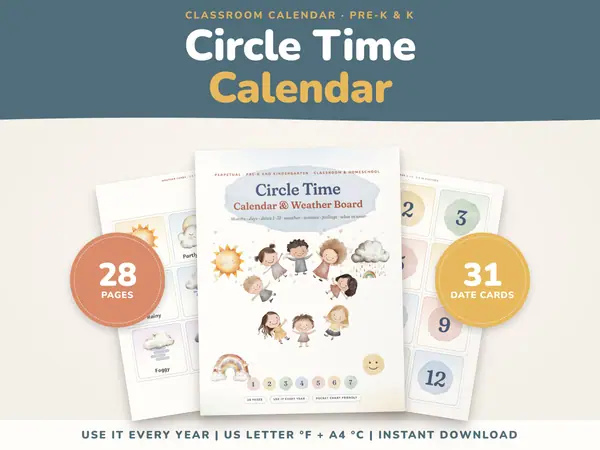
Printables that go with this topic
Questions and answers
How do you describe the weather in English?
Start with It is and add a weather word: "It is sunny. It is windy. It is cold." You can also use the -ing form for action: "It is raining. It is snowing." Both are correct.
What is the difference between hot and warm?
Warm is a pleasant, gentle heat, such as a warm day or warm water. Hot is stronger heat, such as a hot summer or hot soup. Cool is a little cold, and cold is stronger.
Is it raining or rainy?
Both are correct. It is raining describes rain that is falling now. It is rainy describes the general weather of the day. Cloudy and sunny work like rainy, with no -ing form.
What are the four seasons in English?
The four seasons are spring, summer, fall and winter. American English says fall and British English says autumn. Seasons are written with a small letter: in summer, not in Summer.
What weather words should I teach first?
Begin with sunny, rainy, cloudy and windy, then snowy, hot and cold. Link each word to a picture and a symbol on a weather chart. Later add stormy, foggy, warm and cool.
More English vocabulary
- English Alphabet for Kids: Letter Names and Words
- Numbers 1 to 100 in English: Words and Pronunciation
- Colors in English: Names and Pronunciation for Kids
- Shapes in English for Kids: Names and Pronunciation
- Days of the Week in English: Order and Spelling
- Months of the Year and Seasons in English for Kids
- Telling the Time in English: Clock Words for Kids
- Animals in English for Kids: Names and Plurals
- Fruits and Vegetables in English for Kids
- Food and Drinks in English for Kids: Word List
- Parts of the Body in English for Kids
- Family Words in English for Kids: Members and Plurals
- Clothes in English: Words and Pronunciation for Kids
- Classroom Objects in English: School Words for Kids
- Rooms and Furniture in English: House Words for Kids
- Transport in English: Vehicle Words for Kids
- Feelings in English: Emotion Words for Kids
- Action Verbs for Kids: Common English Verbs
- Opposites in English: Word Pairs for Kids
- Prepositions of Place in English: In, On, Under
- English Greetings and Classroom Phrases for Kids
- Question Words in English: Who, What, Where, Why
Link to this page
Teachers and parents are welcome to link to this page. Copy the address or the ready-made link.