Sight Words and Reading Bundle
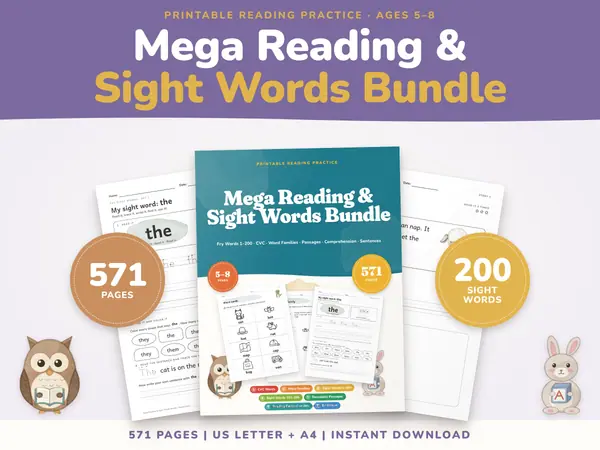
571 pagesUS Letter + A4Kindergarten & 1st gradeEnglish
See price and buy on EtsyBy the Clipart Scout teamUpdated 29 words
Short answer
The first English phrases to learn are Hello, Hi, Good morning, Good afternoon, Goodbye, Please, Thank you, Sorry and Excuse me. To introduce yourself, say My name is Sam and Nice to meet you. To ask How are you? answer I'm fine, thank you. Good night is said when someone goes to bed or leaves for the night, not as a first greeting.
This page lists twenty-nine everyday phrases in four groups: hello and goodbye, polite words, classroom phrases and phrases about yourself. Each phrase has its pronunciation and a short example conversation. Tap the speaker button to hear it.
Below the list you will find a quick practice, ideas for teaching phrases at home or in class, and the mistakes learners make most often, such as good night and good evening, how old are you, and the difference between sorry and excuse me.
| Listen | English | Example |
|---|---|---|
| 👋 | Hello! | Hello, Sam! / Hello, Mia! |
| Hi! | Hi, Tom! / Hi, Ana! | |
| Good morning! | Good morning, teacher! / Good morning, Ben! | |
| Good afternoon! | Good afternoon, Mia! / Good afternoon, Sam! | |
| Good evening! | Good evening, Dad! / Good evening, Ben! | |
| Good night! | Good night, Dad! / Good night, Ben!Said when leaving or going to bed, not as a first greeting. | |
| Goodbye! | Goodbye, Mia! / Goodbye, Sam! | |
| See you tomorrow! | Goodbye, Sam! / See you tomorrow, Mia! |
| Listen | English | Example |
|---|---|---|
| Please. | Can I have water, please? / Yes, here you are. | |
| Thank you. | Here is your pencil. / Thank you! | |
| You're welcome. | Thank you! / You're welcome. | |
| I'm sorry. | I'm sorry! / It's OK. | |
| Excuse me. | Excuse me, can I sit here? / Yes, of course.Said before you ask or pass, not after a mistake. | |
| Yes, please. | Do you want some milk? / Yes, please. | |
| No, thank you. | Do you want more rice? / No, thank you. |
| Listen | English | Example |
|---|---|---|
| Sit down, please. | Sit down, please. / OK, teacher. | |
| Stand up, please. | Stand up, please. / OK, teacher. | |
| Open your book. | Open your book. / Yes, teacher. | |
| Listen, please. | Listen, please. / OK, teacher. | |
| Can I go to the bathroom? (British: Can I go to the toilet?) | Can I go to the bathroom? / Yes, go ahead.British English often says toilet instead of bathroom. | |
| I don't understand. | I don't understand. / Let me help you. | |
| How do you say ... in English? | How do you say gato in English? / You say cat. | |
| Can you repeat that, please? | Can you repeat that, please? / Yes, of course. |
| Listen | English | Example |
|---|---|---|
| My name is ... | What is your name? / My name is Sam. | |
| What is your name? | What is your name? / My name is Ana. | |
| I am seven years old. | How old are you? / I am seven years old.Say I am seven, not I have seven years. | |
| How are you? | How are you? / I'm fine, thank you. | |
| I'm fine, thank you. | How are you today? / I'm fine, thank you. | |
| Nice to meet you. | Hi, I am Ana. / Nice to meet you, Ana. |
Stand at a door and greet the child each time they come in: "Good morning, Mia." The child answers in the same way. Use the greeting that matches the time of day, and give the child a turn to be the person at the door.
Use two puppets or toys and let them meet: "Hello. My name is Bo. What is your name?" Speak both parts first, then let the child speak for one puppet. Children who feel shy often speak more easily through a toy.
Make please and thank you part of every snack time. The child asks, "Can I have water, please?" You answer, and the child says, "Thank you." You say, "You're welcome." A real need gives the words a real meaning.
Practice the classroom phrases with actions: "Stand up, please. Sit down, please. Open your book." The child acts them out, and then gives the commands. Add "I don't understand" for the moment when the child needs help.
Take turns with a family member or toy. The child says, "This is my friend Ben. He is eight." The other person answers, "Nice to meet you." Do it with real names, so the child can use the phrases outside the lesson.
Make a card for each phrase with a small drawing: a sun for Good morning, a moon for Good night. Show a card and the child says the phrase. Mix the cards and ask, "When do we say it?" so the child connects the phrase to a moment.
Good night is said when someone leaves in the evening or goes to bed: "Good night, Dad." To greet someone in the evening, say Good evening. Wrong: "Good night, nice to meet you" at the start of a meeting.
In English you are your age: "I am seven years old" or just "I am seven." The question is "How old are you?" Wrong: "I have seven years." Right: "I am seven."
Answer with a feeling and then ask back: "I'm fine, thank you. And you?" Wrong: answering "How are you?" with "How are you?" alone. Use the full short answer until it comes without thinking.
Say I'm sorry after a mistake or when you hurt someone: "I'm sorry!" Say excuse me before you ask something, pass someone or get attention: "Excuse me, can I sit here?" Practice both with small real situations.
Use Good morning in the morning, Good afternoon from midday until the early evening, and Good evening later in the day. Hello and Hi work at any time. Goodbye is one word, and Bye is the short form.
571 pagesUS Letter + A4Kindergarten & 1st gradeEnglish
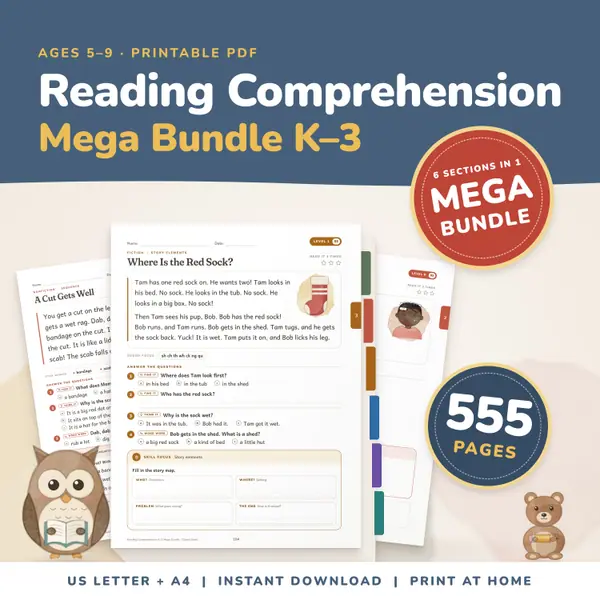
See price and buy on Etsy555 pagesUS Letter + A4Kindergarten to 3rd gradeEnglish
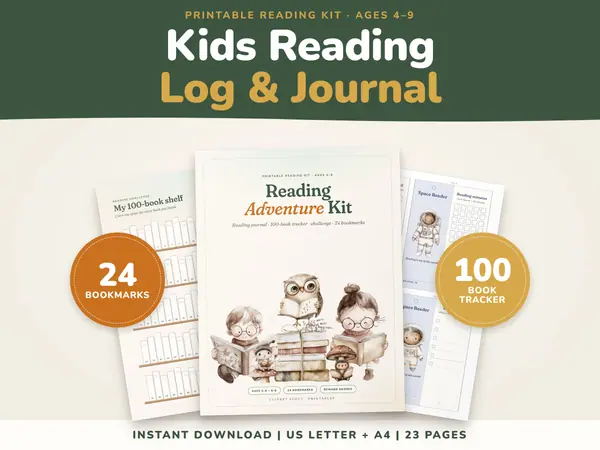
See price and buy on Etsy23 pagesUS Letter + A4KindergartenEnglish
See price and buy on EtsyHello and Hi work at any time. Good morning, Good afternoon and Good evening depend on the time of day. To say goodbye, use Goodbye, Bye or See you tomorrow. Good night is for bedtime.
We say good night when someone goes to bed or when we leave in the evening. We do not use it as a hello. For a hello in the evening, say good evening.
A simple answer is I'm fine, thank you. You can also say I'm good, I'm great or I'm tired. It is polite to ask back: And you? Children can start with I'm fine.
Both are greetings. Hello is a little more formal and works for everyone. Hi is shorter and friendly, and children use it with friends and family. A child can learn both.
Start with Sit down, please, Stand up, please, Open your book and Listen, please. Then add phrases to ask for help: I don't understand, Can you repeat that, please? and How do you say it in English?
Teachers and parents are welcome to link to this page. Copy the address or the ready-made link.