Months of the Year and Seasons in English, in Order
By the Clipart Scout teamUpdated 20 words
Short answer
The 12 months in English are January, February, March, April, May, June, July, August, September, October, November and December. The four seasons are spring, summer, fall and winter; British English says autumn instead of fall. Months start with a capital letter, seasons do not. Use in with both: in May, in summer.
This page lists the twelve months in order, with their short forms, the number of days in each month and their pronunciation, followed by the four seasons and a few time words such as month, year, birthday and calendar. Tap the speaker button to hear a word.
Further down you will find a quick practice, ways to teach months and seasons with a calendar, and the mistakes learners make most often, from capital letters to the small word that comes before a month.
Word list
Months
| Listen | English | Example |
|---|---|---|
| January/ˈdʒænjueri/Jan. · 31 | January is the first month. | |
| February/ˈfebjəweri/Feb. · 28 or 29 | February is the shortest month.Spelling trap: Feb-ru-ary. The first r is often left out when speaking. | |
| March/mɑːrtʃ/Mar. · 31 | My friend has a party in March. | |
| April/ˈeɪprəl/Apr. · 30 | I go to the park in April. | |
| May/meɪ/May. · 31 | We play outside in May.May is the month. The word may is also a verb: "May I go?" | |
| June/dʒuːn/Jun. · 30 | I swim in June. | |
| July/ˌdʒuːˈlaɪ/Jul. · 31 | We go to the beach in July. | |
| August/ˈɑːɡəst/Aug. · 31 | We go on a trip in August.Do not confuse the month August with the word august (grand). | |
| September/sepˈtembər/Sep. · 30 | I read many books in September.Short forms are Sep or Sept. The month has 30 days. | |
| October/ɑːkˈtoʊbər/Oct. · 31 | I draw a picture in October. | |
| November/noʊˈvembər/Nov. · 30 | We cook together in November. | |
| December/dɪˈsembər/Dec. · 31 | December is the last month. |
Seasons
Practice on screen
Look at the picture or number and choose the right English word. Ten questions each round.
How to teach it
1. A big wall calendar
Hang a wall calendar and turn the page at the start of every month. Say the new month name together and point to the picture. Mark birthdays and holidays with stickers so that the child links each month to events that matter in the child's own life.
2. Birthday line-up
Ask each child to say the month of their birthday: "My birthday is in June." Then have the children stand in a line in month order, from January to December, and say their months out loud one by one. Mix up the line and do it again.
3. Month cards in a circle
Write each month on a card and lay the twelve cards in a circle. The child walks around the circle saying each month. When this is easy, take away a few cards and ask the child to say which months are missing.
4. Draw the four seasons
Fold a sheet of paper into four and draw one season in each part, with its weather and clothes: snow in winter, flowers in spring. Under each picture write the season and the months, so the child connects both lists.
5. Knuckle trick for days in a month
Make a fist and say the months along the knuckles and the dips between them. Months that fall on a knuckle have 31 days; the others have fewer. Children enjoy this trick, and it gives a reason to say all twelve names in order.
6. Which month comes next?
Ask a quick question and let the child answer: "What month comes after March? What month comes before October?" Start with the months the child knows well and move on to the harder ones.
Common mistakes
Writing months with a small letter
Months always start with a capital letter in English: January, March, December. Write "My birthday is in april" with a capital A: "My birthday is in April." The names of the seasons, though, do not take a capital: spring, summer.
Using at or on instead of in
Use in before a month or a season: in July, in winter. Use on before a day (on Monday) and at before a clock time (at three o'clock). Learners often say "at July" or "on July".
Misspelling February
February has two letters r: Feb-ru-ary. Many learners write "Febuary" because the first r is often not pronounced. Say the word slowly, with every sound, when you write it.
Fall or autumn
American English calls the season fall and British English calls it autumn. Both are correct. Choose one for your lessons and tell the child that the other word exists, so that books and videos do not confuse them.
Mixing up the numbers of days
April, June, September and November have 30 days. February has 28 days, or 29 in a leap year. All the other months have 31. A rhyme or the knuckle trick helps learners remember this.
Printables that go with this topic
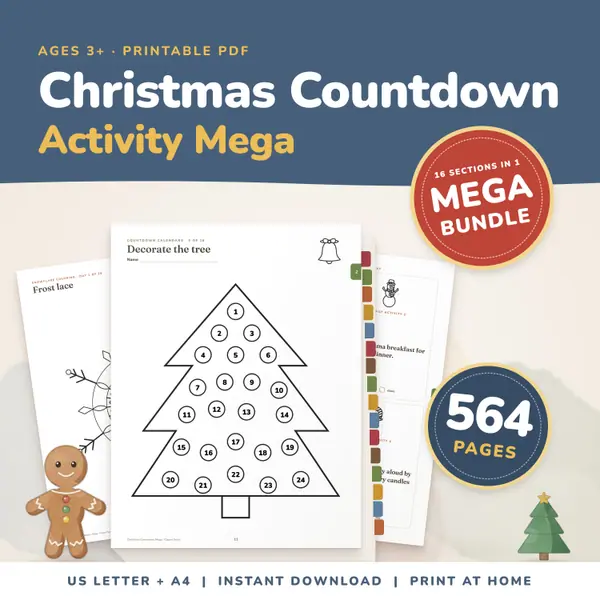
Christmas Countdown Activity Mega Bundle
564 pagesUS Letter + A4Teens & adultsEnglish
See price and buy on Etsy
Questions and answers
What are the 12 months in order?
January, February, March, April, May, June, July, August, September, October, November, December. January is the first month and December is the last.
What are the four seasons in English?
Spring, summer, fall and winter. In British English the third season is called autumn. In many places the seasons come in this order, but the weather in each season differs from country to country.
Do months have a capital letter in English?
Yes. All twelve months start with a capital letter. The seasons do not: write "in June" and "in summer". The days of the week also take a capital letter.
Is it in May or on May?
It is in May. Use in with months. For a date, use on: "on May 5" in American English or "on the fifth of May" in British English.
How many days are in each month?
April, June, September and November have 30 days. February has 28, and 29 in a leap year. January, March, May, July, August, October and December have 31.
More English vocabulary
- English Alphabet for Kids: Letter Names and Words
- Numbers 1 to 100 in English: Words and Pronunciation
- Colors in English: Names and Pronunciation for Kids
- Shapes in English for Kids: Names and Pronunciation
- Days of the Week in English: Order and Spelling
- Telling the Time in English: Clock Words for Kids
- Animals in English for Kids: Names and Plurals
- Fruits and Vegetables in English for Kids
- Food and Drinks in English for Kids: Word List
- Parts of the Body in English for Kids
- Family Words in English for Kids: Members and Plurals
- Clothes in English: Words and Pronunciation for Kids
- Classroom Objects in English: School Words for Kids
- Rooms and Furniture in English: House Words for Kids
- Transport in English: Vehicle Words for Kids
- Feelings in English: Emotion Words for Kids
- Weather Words in English: Vocabulary for Kids
- Action Verbs for Kids: Common English Verbs
- Opposites in English: Word Pairs for Kids
- Prepositions of Place in English: In, On, Under
- English Greetings and Classroom Phrases for Kids
- Question Words in English: Who, What, Where, Why
Link to this page
Teachers and parents are welcome to link to this page. Copy the address or the ready-made link.