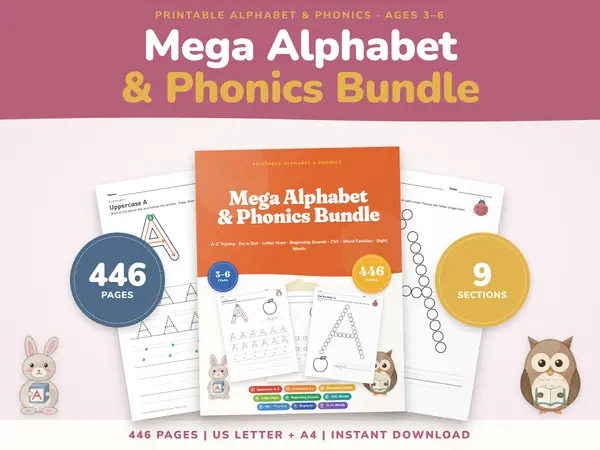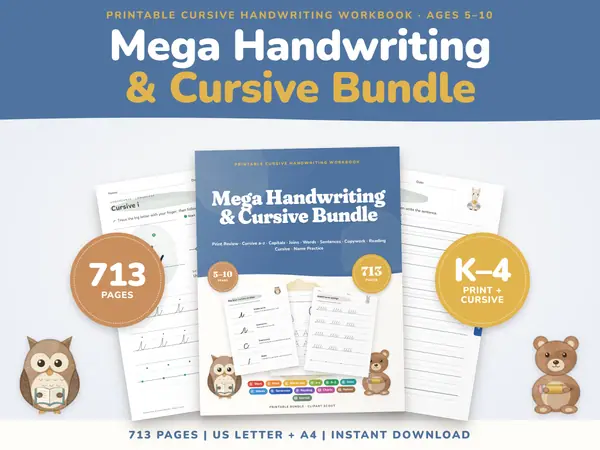
Cursive Handwriting Practice Bundle
713 pagesUS Letter + A4Kindergarten to 4th gradeEnglish
在Etsy上查看价格并购买
Clipart Scout 团队更新于 20 个单词
简短回答
常见的英语反义词有 big ↔ small(大 ↔ 小)、hot ↔ cold(热 ↔ 冷)、tall ↔ short(高 ↔ 矮)、fast ↔ slow(快 ↔ 慢)、old ↔ young(老 ↔ 年轻)、heavy ↔ light(重 ↔ 轻)、wet ↔ dry(湿 ↔ 干)。成对地学,记一个词就记住了两个。
反义词是孩子学形容词最好的方法:把两个意思相反的词放在一起,一对比就明白了。这一页列出 20 对常用的反义词,每对都配有读音和一个简短的例句,点喇叭按钮就能听。
页面下面有玩反义词游戏的方法,也写了中国孩子学反义词时最常见的错误:漏掉 be 动词、tall 和 short 的用法、old 和 new 的搭配,以及 light 的两个意思。
| 听读音 | 英语 | 中文意思 | 例句 |
|---|---|---|---|
| big ↔ small/bɪɡ/ ↔ /smɔːl/An elephant is big. A mouse is small. | 大 ↔ 小 | An elephant is big. A mouse is small. | |
| hot ↔ cold/hɑːt/ ↔ /koʊld/The soup is hot. The ice is cold. | 热 ↔ 冷 | The soup is hot. The ice is cold. | |
| tall ↔ short/tɔːl/ ↔ /ʃɔːrt/A giraffe is tall. A cat is short. | 高 ↔ 矮 | A giraffe is tall. A cat is short. | |
| fast ↔ slow/fæst/ ↔ /sloʊ/A rabbit is fast. A turtle is slow. | 快 ↔ 慢 | A rabbit is fast. A turtle is slow. | |
| old ↔ young/oʊld/ ↔ /jʌŋ/My grandfather is old. The baby is young. | 老 ↔ 年轻说东西旧用 old ↔ new,说人年老年轻用 old ↔ young。 | My grandfather is old. The baby is young. | |
| heavy ↔ light/ˈhevi/ ↔ /laɪt/A rock is heavy. A feather is light. | 重 ↔ 轻这里的 light 是“轻”,不是“光”或“灯”。 | A rock is heavy. A feather is light. | |
| hard ↔ soft/hɑːrd/ ↔ /sɔːft/A stone is hard. A pillow is soft. | 硬 ↔ 软hard 也可以表示“难”,soft 是“软”。 | A stone is hard. A pillow is soft. | |
| wet ↔ dry/wet/ ↔ /draɪ/The dog is wet. The towel is dry. | 湿 ↔ 干 | The dog is wet. The towel is dry. | |
| clean ↔ dirty/kliːn/ ↔ /ˈdɜːrti/The plate is clean. The sock is dirty. | 干净 ↔ 脏 | The plate is clean. The sock is dirty. | |
| full ↔ empty/fʊl/ ↔ /ˈempti/The glass is full. The box is empty. | 满 ↔ 空 | The glass is full. The box is empty. | |
| bright ↔ dark/braɪt/ ↔ /dɑːrk/The sun is bright. The night is dark. | 明亮 ↔ 黑暗 | The sun is bright. The night is dark. | |
| loud ↔ quiet/laʊd/ ↔ /ˈkwaɪət/The drum is loud. The mouse is quiet. | 大声 ↔ 安静 | The drum is loud. The mouse is quiet. | |
| easy ↔ difficult/ˈiːzi/ ↔ /ˈdɪfəkəlt/The game is easy. The test is difficult. | 容易 ↔ 困难 | The game is easy. The test is difficult. | |
| right ↔ left/raɪt/ ↔ /left/I raise my right hand. I raise my left hand. | 右 ↔ 左这里的 right 是“右边”,不是“对”。 | I raise my right hand. I raise my left hand. | |
| thick ↔ thin/θɪk/ ↔ /θɪn/The book is thick. The paper is thin. | 厚 ↔ 薄 | The book is thick. The paper is thin. | |
| early ↔ late/ˈɜːrli/ ↔ /leɪt/I get up early. I go to bed late. | 早 ↔ 晚 | I get up early. I go to bed late. | |
| up ↔ down/ʌp/ ↔ /daʊn/The kite goes up. The ball goes down. | 上 ↔ 下 | The kite goes up. The ball goes down. | |
| wide ↔ narrow/waɪd/ ↔ /ˈnæroʊ/The road is wide. The path is narrow. | 宽 ↔ 窄 | The road is wide. The path is narrow. | |
| sweet ↔ sour/swiːt/ ↔ /ˈsaʊər/The honey is sweet. The lemon is sour. | 甜 ↔ 酸 | The honey is sweet. The lemon is sour. | |
| strong ↔ weak/strɔːŋ/ ↔ /wiːk/A bear is strong. A butterfly is weak. | 强壮 ↔ 虚弱 | A bear is strong. A butterfly is weak. |
看图或看数字,选出正确的英语单词。选择英语单词的正确中文意思也可以。每轮十道题。
大人说一个词,孩子用动作表现:big 就把双手张开,small 就蹲下缩成一团;fast 就快跑,slow 就慢走。再说反义词,孩子换另一个动作。身体做出来的对比,比说出来的更容易记住。
做一些卡片,一张写 hot,一张写 cold,一共做几对,打乱后摆在桌上,让孩子翻开两张,如果是一对反义词就收走。年纪小的孩子可以用图画代替单词,看图配对,配对成功时大声读出两个词。
大人说一句话,孩子说相反的:“The elephant is big.”孩子说:“The mouse is small.”也可以玩“反着说”的游戏,大人说 up,孩子说 down,说得越快越好玩。
让孩子比较身边真实的东西:“My hand is big. Your hand is small.”桌子是硬的,枕头是软的,孩子可以摸一摸、比一比,再用英文说出来。真实的东西摆在眼前,对词义的理解比看图更准确。
中文说“它很大”不需要动词,孩子会说 It big。英文形容词前面要有 be 动词:It is big,They are small。如果加上 very,说成 It is very big。
tall 和 short 描述人、树、楼的高矮。说东西的长短用 long ↔ short。中文都是“高”“矮”“长”“短”,英文的 short 既可以是矮,也可以是短,孩子要看对象来选。
light 作为 heavy 的反义词是“轻”,但它也有“光、灯”和“浅色”的意思。孩子看到 light 会犹豫。在这一页里 heavy ↔ light 是“重”和“轻”,要和 bright(明亮)区分开。
说人,old 的反义词是 young;说东西,old 的反义词是 new。孩子常说 a young car,或者 an old baby。这一页学的是 old ↔ young,说书、车、衣服旧了,要用 old,不要用 young。
right 有“右边”和“对的”两种意思:right ↔ left 是右和左,right ↔ wrong 是对和错。孩子容易混淆,要结合画面或例句来理解:Turn right 是向右转,That is right 是“对了”。
这份打印资料是英语版,商品页面也是英语。
713 pagesUS Letter + A4Kindergarten to 4th gradeEnglish
在Etsy上查看价格并购买big ↔ small、hot ↔ cold、tall ↔ short、fast ↔ slow、old ↔ young、heavy ↔ light、wet ↔ dry、clean ↔ dirty、full ↔ empty、easy ↔ difficult。先学这十对,孩子日常用得最多。
成对地教,一次一对。用动作和实物来对比:把大小两样东西放在一起,说出 big 和 small。孩子分清了,再玩配对游戏。一次不要超过三对。
看说什么。说东西,old 的反义词是 new:an old car,a new car。说人和动物,old 的反义词是 young:an old man,a young man。这一页学的是 old ↔ young。
因为一个词有几个意思。比如 hard 作“硬”时反义词是 soft,作“难”时反义词是 easy。孩子刚学时先记最常用的一对,大一些再学别的。
欢迎老师和家长链接到本页。复制地址或现成的链接即可。