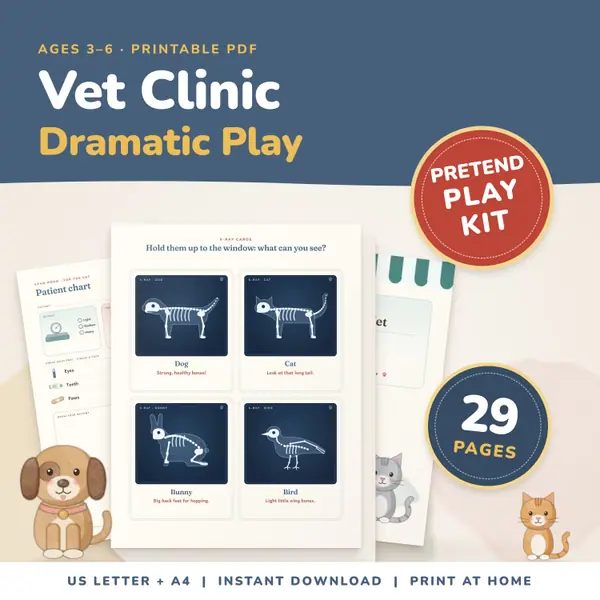
Vet Clinic Dramatic Play Printable
29 pagesUS Letter + A4PreschoolEnglish
Vedi il prezzo e acquista su EtsyA cura del team di Clipart ScoutAggiornato 41 parole
Risposta breve
Gli animali domestici più comuni in inglese sono dog, cat, rabbit e hamster; in fattoria ci sono cow, horse, pig, sheep, chicken, duck e goat; tra i selvatici lion, tiger, elephant, monkey e bear. Alcuni nomi non cambiano al plurale (one sheep, two sheep; one fish, two fish) e altri sono irregolari (one mouse, two mice).
In questa pagina trovi i nomi di quaranta animali in inglese divisi in cinque gruppi: animali domestici, della fattoria, selvatici, marini e insetti o piccoli animali. Ogni parola ha il significato in italiano, la pronuncia e una frase breve. Premi l'altoparlante per ascoltarla.
Più sotto ci sono un esercizio, idee per giocare con gli animali a casa o in classe e gli errori tipici degli italiani: dal plurale irregolare ai nomi che si leggono con le regole dell'italiano e invece si pronunciano in un altro modo.
| Ascolta | Inglese | Significato | Esempio |
|---|---|---|---|
| 🐶 | dog/dɔːɡ/a dog · dogsThe dog is brown. | cane | The dog is brown. |
| 🐱 | cat/kæt/a cat · catsThe cat sleeps on my bed. | gatto | The cat sleeps on my bed. |
| 🐰 | rabbit/ˈræbət/a rabbit · rabbitsThe rabbit eats a carrot. | coniglio | The rabbit eats a carrot. |
| 🐹 | hamster/ˈhæmstər/a hamster · hamstersMy hamster is small. | criceto | My hamster is small. |
| 🦜 | parrot/ˈpærət/a parrot · parrotsThe parrot has green wings. | pappagallo | The parrot has green wings. |
| 🐢 | turtle/ˈtɜːrtəl/a turtle · turtlesThe turtle walks very slowly. | tartaruga | The turtle walks very slowly. |
| Ascolta | Inglese | Significato | Esempio |
|---|---|---|---|
| 🐄 | cow/kaʊ/a cow · cowsThe cow says moo. | mucca | The cow says moo. |
| 🐴 | horse/hɔːrs/a horse · horsesI like to ride a horse. | cavallo | I like to ride a horse. |
| 🐷 | pig/pɪɡ/a pig · pigsThe pig is pink. | maiale | The pig is pink. |
| 🐑 | sheep/ʃiːp/a sheep · sheepThe sheep has soft wool. | pecoraIl plurale è uguale: two sheep. | The sheep has soft wool. |
| 🐔 | chicken/ˈtʃɪkən/a chicken · chickensThe chicken lays eggs. | gallina / polloÈ l'animale e anche la sua carne, il pollo. | The chicken lays eggs. |
| 🦆 | duck/dʌk/a duck · ducksThe duck swims on the pond. | anatra | The duck swims on the pond. |
| 🐐 | goat/ɡoʊt/a goat · goatsThe goat eats grass. | capra | The goat eats grass. |
| Ascolta | Inglese | Significato | Esempio |
|---|---|---|---|
| 🦁 | lion/ˈlaɪən/a lion · lionsThe lion is strong. | leone | The lion is strong. |
| 🐯 | tiger/ˈtaɪɡər/a tiger · tigersThe tiger has stripes. | tigre | The tiger has stripes. |
| 🐘 | elephant/ˈeləfənt/an elephant · elephantsThe elephant has a long trunk. | elefante | The elephant has a long trunk. |
| 🐒 | monkey/ˈmʌŋki/a monkey · monkeysThe monkey climbs the tree. | scimmia | The monkey climbs the tree. |
| 🦒 | giraffe/dʒəˈræf/a giraffe · giraffesThe giraffe has a long neck. | giraffa | The giraffe has a long neck. |
| 🦓 | zebra/ˈziːbrə/a zebra · zebrasThe zebra has black and white stripes. | zebra | The zebra has black and white stripes. |
| 🐻 | bear/ber/a bear · bearsThe bear likes honey. | orso | The bear likes honey. |
| 🐺 | wolf/wʊlf/a wolf · wolvesThe wolf howls at night. | lupo | The wolf howls at night. |
| 🦊 | fox/fɑːks/a fox · foxesThe fox has a bushy tail. | volpe | The fox has a bushy tail. |
| 🦌 | deer/dɪr/a deer · deerThe deer runs in the forest. | cervoIl plurale è uguale: two deer. | The deer runs in the forest. |
| 🐍 | snake/sneɪk/a snake · snakesThe snake has no legs. | serpente | The snake has no legs. |
| 🐧 | penguin/ˈpeŋɡwən/a penguin · penguinsThe penguin cannot fly. | pinguino | The penguin cannot fly. |
| 🐦 | bird/bɜːrd/a bird · birdsThe bird sings in the tree. | uccello | The bird sings in the tree. |
| Ascolta | Inglese | Significato | Esempio |
|---|---|---|---|
| 🐟 | fish/fɪʃ/a fish · fishThe fish swims in the water. | pesceIl plurale è di solito uguale: two fish. | The fish swims in the water. |
| 🐋 | whale/weɪl/a whale · whalesThe whale is very big. | balena | The whale is very big. |
| 🐬 | dolphin/ˈdɑːlfən/a dolphin · dolphinsThe dolphin jumps in the sea. | delfino | The dolphin jumps in the sea. |
| 🦈 | shark/ʃɑːrk/a shark · sharksThe shark has sharp teeth. | squalo | The shark has sharp teeth. |
| 🐙 | octopus/ˈɑːktəpʊs/an octopus · octopusesThe octopus has eight arms. | polpo | The octopus has eight arms. |
| 🦀 | crab/kræb/a crab · crabsThe crab walks sideways. | granchio | The crab walks sideways. |
| Ascolta | Inglese | Significato | Esempio |
|---|---|---|---|
| 🐝 | bee/biː/a bee · beesThe bee makes honey. | ape | The bee makes honey. |
| 🦋 | butterfly/ˈbʌtərflaɪ/a butterfly · butterfliesThe butterfly has pretty wings. | farfalla | The butterfly has pretty wings. |
| 🐜 | ant/ænt/an ant · antsThe ant is very small. | formica | The ant is very small. |
| 🕷️ | spider/ˈspaɪdər/a spider · spidersThe spider makes a web. | ragno | The spider makes a web. |
| 🐞 | ladybug (Britannico: ladybird)/ˈleɪdibʌɡ/a ladybug · ladybugsThe ladybug is red with black dots. | coccinella | The ladybug is red with black dots. |
| 🐌 | snail/sneɪl/a snail · snailsThe snail moves slowly. | lumaca | The snail moves slowly. |
| 🪱 | worm/wɜːrm/a worm · wormsThe worm lives in the soil. | verme | The worm lives in the soil. |
| 🐸 | frog/frɑːɡ/a frog · frogsThe frog jumps into the pond. | rana | The frog jumps into the pond. |
| 🐭 | mouse/maʊs/a mouse · miceThe mouse is very quiet. | topoIl plurale è mice, e il topo del computer è mouse. | The mouse is very quiet. |
Guarda l'immagine o il numero e scegli il significato giusto della parola inglese. Dieci domande per ogni turno.
Per ogni animale impara il verso in inglese e fai l'imitazione: the cow says moo, the duck says quack, the dog says woof. I bambini adorano imitare, e collegando la parola a un suono e a un gesto la ricordano più facilmente.
Metti sul tavolo peluche, figurine o disegni. Dì: «Give me the lion», «Where is the cat?». Il bambino ascolta, indica o porta l'animale. Quando conosce le parole, invertite i ruoli e sia lui a chiedere.
Costruisci con una scatola una piccola fattoria e un mare con un foglio azzurro. Il bambino sistema gli animali nel posto giusto dicendo: «The cow lives on the farm. The shark lives in the sea». Dopo un po' prova a dividerli per gruppi.
Descrivi un animale con poche parole: «I am big. I have a long trunk». Il bambino indovina «Elephant!». Poi tocca a lui. Si può usare anche una carta sulla fronte: gli altri danno indizi e lui deve capire quale animale è.
Cerca un animale per ogni lettera, dalla A di ant alla Z di zebra, e scrivili in ordine su un cartellone. Il bambino ripassa l'alfabeto e impara nuove parole, e puoi aggiungere un disegno per ogni lettera.
Se vai allo zoo o in campagna, dì i nomi in inglese mentre guardate gli animali: «Look, a monkey!». Anche una gita al parco con scoiattoli e uccelli va bene. Poi a casa, il bambino disegna quello che ha visto e lo nomina.
Questi nomi non cambiano al plurale: one sheep, two sheep; one deer, two deer. Mouse diventa mice. Un errore tipico è «sheeps» o «mouses», perché in italiano il plurale cambia sempre la finale (pecora, pecore).
In tiger la i suona come «ai» e in lion come «lai»: TAI-ger, LAI-on. Chi legge «tìger» o «lìon» legge con le regole dell'italiano. In bear e deer le vocali sono lunghe e il suono non è quello della lettera.
In italiano ch si legge k (chiave, chilo). In inglese chicken inizia con ch come nella parola italiana «ciao», non con la k. Chi dice «kicken» si fa capire meno. Metti la lingua al palato e lascia uscire l'aria con un piccolo scoppio.
Si dice an elephant, an octopus, an ant, ma a dog, a cat. In italiano «un» vale per tutti, quindi i bambini dicono «a elephant». Fai ripetere la frase intera: «It is an elephant».
Molte parole inglesi finiscono con una consonante: dog, cat, pig, frog. Gli italiani tendono ad aggiungere una e muta: «dogge», «catte». Chiudi la bocca subito dopo l'ultima consonante, senza far uscire altra voce.
Il materiale stampabile e la sua pagina di vendita sono in inglese.
29 pagesUS Letter + A4PreschoolEnglish
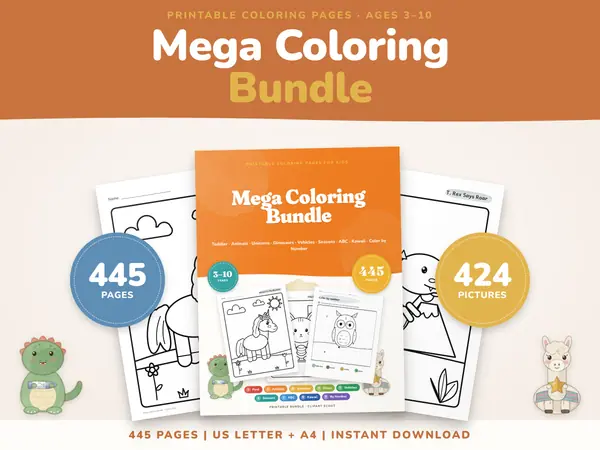
Vedi il prezzo e acquista su Etsy445 pagesUS Letter + A4Ages 3–10English
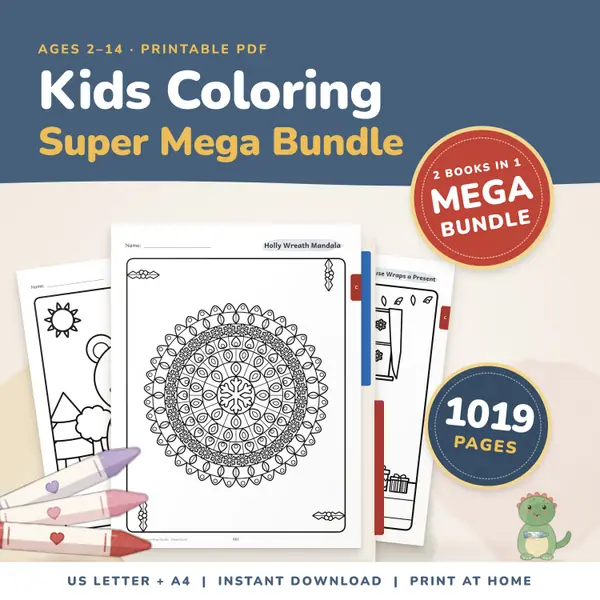
Vedi il prezzo e acquista su Etsy1,019 pagesUS Letter + A4Ages 2–14English
Vedi il prezzo e acquista su EtsyDog (cane), cat (gatto), cow (mucca), horse (cavallo), pig (maiale), lion (leone), elephant (elefante) e così via: sulla pagina trovi quaranta animali con traduzione, pronuncia e una frase d'esempio.
Quelli che il bambino conosce già e vede spesso: dog, cat, cow, pig, duck e bird. Poi aggiungi quelli dello zoo, come lion, elephant e monkey. Tre o quattro animali nuovi per volta bastano.
Sheep rimane uguale: two sheep. Fish di solito rimane uguale: two fish. Mouse è irregolare e diventa mice. Altri plurali irregolari sono wolf, che diventa wolves, e goose, geese.
In inglese la mucca fa moo, il cane woof, il gatto meow, l'anatra quack, il maiale oink. Sono parole diverse dalle nostre (muu, bau, miao, qua qua, grunt grunt) e piacciono molto ai bambini.
Insegnanti e genitori possono inserire un link a questa pagina. Copia l'indirizzo o il link già pronto.