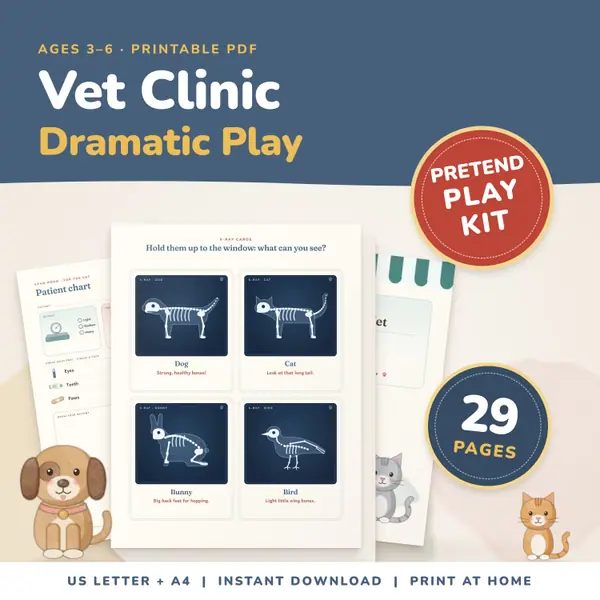
Vet Clinic Dramatic Play Printable
29 pagesUS Letter + A4PreschoolEnglish
Ver el precio y comprar en EtsyDel equipo de Clipart ScoutActualizado 41 palabras
Respuesta breve
Los primeros animales en inglés suelen ser las mascotas (dog, cat, rabbit), los de la granja (cow, horse, pig, sheep, chicken, duck) y los salvajes (lion, tiger, elephant, monkey). Casi todos forman el plural con -s: dogs, cats. Pero hay plurales irregulares que conviene aprender pronto: mouse, mice; sheep, sheep; fish, fish; wolf, wolves.
Esta página reúne los animales más conocidos por los niños, ordenados en mascotas, animales de la granja, salvajes, del mar e insectos. Cada palabra tiene su significado en español, su pronunciación y una frase de ejemplo. Pulsa el altavoz para oírla.
Los animales gustan a todos los niños, y por eso son un tema excelente para aprender vocabulario. Debajo de la lista hay una práctica en pantalla, ideas para enseñarlos en casa o en el aula y los errores que más cometen los hispanohablantes.
| Escuchar | Inglés | Significado | Ejemplo |
|---|---|---|---|
| 🐶 | dog/dɔːɡ/a dog · dogsThe dog is brown. | perro | The dog is brown. |
| 🐱 | cat/kæt/a cat · catsThe cat sleeps on my bed. | gato | The cat sleeps on my bed. |
| 🐰 | rabbit/ˈræbət/a rabbit · rabbitsThe rabbit eats a carrot. | conejo | The rabbit eats a carrot. |
| 🐹 | hamster/ˈhæmstər/a hamster · hamstersMy hamster is small. | hámster | My hamster is small. |
| 🦜 | parrot/ˈpærət/a parrot · parrotsThe parrot has green wings. | loro / papagayo | The parrot has green wings. |
| 🐢 | turtle/ˈtɜːrtəl/a turtle · turtlesThe turtle walks very slowly. | tortuga | The turtle walks very slowly. |
| Escuchar | Inglés | Significado | Ejemplo |
|---|---|---|---|
| 🐄 | cow/kaʊ/a cow · cowsThe cow says moo. | vaca | The cow says moo. |
| 🐴 | horse/hɔːrs/a horse · horsesI like to ride a horse. | caballo | I like to ride a horse. |
| 🐷 | pig/pɪɡ/a pig · pigsThe pig is pink. | cerdo / puerco | The pig is pink. |
| 🐑 | sheep/ʃiːp/a sheep · sheepThe sheep has soft wool. | ovejaSingular y plural son iguales: one sheep, two sheep. | The sheep has soft wool. |
| 🐔 | chicken/ˈtʃɪkən/a chicken · chickensThe chicken lays eggs. | pollo / gallinaEs el pollo, la gallina o el animal; también la carne. | The chicken lays eggs. |
| 🦆 | duck/dʌk/a duck · ducksThe duck swims on the pond. | pato | The duck swims on the pond. |
| 🐐 | goat/ɡoʊt/a goat · goatsThe goat eats grass. | cabra | The goat eats grass. |
| Escuchar | Inglés | Significado | Ejemplo |
|---|---|---|---|
| 🦁 | lion/ˈlaɪən/a lion · lionsThe lion is strong. | león | The lion is strong. |
| 🐯 | tiger/ˈtaɪɡər/a tiger · tigersThe tiger has stripes. | tigre | The tiger has stripes. |
| 🐘 | elephant/ˈeləfənt/an elephant · elephantsThe elephant has a long trunk. | elefante | The elephant has a long trunk. |
| 🐒 | monkey/ˈmʌŋki/a monkey · monkeysThe monkey climbs the tree. | mono | The monkey climbs the tree. |
| 🦒 | giraffe/dʒəˈræf/a giraffe · giraffesThe giraffe has a long neck. | jirafa | The giraffe has a long neck. |
| 🦓 | zebra/ˈziːbrə/a zebra · zebrasThe zebra has black and white stripes. | cebra | The zebra has black and white stripes. |
| 🐻 | bear/ber/a bear · bearsThe bear likes honey. | oso | The bear likes honey. |
| 🐺 | wolf/wʊlf/a wolf · wolvesThe wolf howls at night. | loboEl plural es wolves. | The wolf howls at night. |
| 🦊 | fox/fɑːks/a fox · foxesThe fox has a bushy tail. | zorro | The fox has a bushy tail. |
| 🦌 | deer/dɪr/a deer · deerThe deer runs in the forest. | ciervo / venadoSingular y plural son iguales: one deer, two deer. | The deer runs in the forest. |
| 🐍 | snake/sneɪk/a snake · snakesThe snake has no legs. | serpiente / culebra | The snake has no legs. |
| 🐧 | penguin/ˈpeŋɡwən/a penguin · penguinsThe penguin cannot fly. | pingüino | The penguin cannot fly. |
| 🐦 | bird/bɜːrd/a bird · birdsThe bird sings in the tree. | pájaro / ave | The bird sings in the tree. |
| Escuchar | Inglés | Significado | Ejemplo |
|---|---|---|---|
| 🐟 | fish/fɪʃ/a fish · fishThe fish swims in the water. | pezPlural: fish. Fishes se usa para varias especies. | The fish swims in the water. |
| 🐋 | whale/weɪl/a whale · whalesThe whale is very big. | ballena | The whale is very big. |
| 🐬 | dolphin/ˈdɑːlfən/a dolphin · dolphinsThe dolphin jumps in the sea. | delfín | The dolphin jumps in the sea. |
| 🦈 | shark/ʃɑːrk/a shark · sharksThe shark has sharp teeth. | tiburón | The shark has sharp teeth. |
| 🐙 | octopus/ˈɑːktəpʊs/an octopus · octopusesThe octopus has eight arms. | pulpo | The octopus has eight arms. |
| 🦀 | crab/kræb/a crab · crabsThe crab walks sideways. | cangrejo / jaiba | The crab walks sideways. |
| Escuchar | Inglés | Significado | Ejemplo |
|---|---|---|---|
| 🐝 | bee/biː/a bee · beesThe bee makes honey. | abeja | The bee makes honey. |
| 🦋 | butterfly/ˈbʌtərflaɪ/a butterfly · butterfliesThe butterfly has pretty wings. | mariposa | The butterfly has pretty wings. |
| 🐜 | ant/ænt/an ant · antsThe ant is very small. | hormiga | The ant is very small. |
| 🕷️ | spider/ˈspaɪdər/a spider · spidersThe spider makes a web. | araña | The spider makes a web. |
| 🐞 | ladybug (Británico: ladybird)/ˈleɪdibʌɡ/a ladybug · ladybugsThe ladybug is red with black dots. | mariquita / catarinaEn el Reino Unido se dice ladybird. | The ladybug is red with black dots. |
| 🐌 | snail/sneɪl/a snail · snailsThe snail moves slowly. | caracol | The snail moves slowly. |
| 🪱 | worm/wɜːrm/a worm · wormsThe worm lives in the soil. | gusano / lombriz | The worm lives in the soil. |
| 🐸 | frog/frɑːɡ/a frog · frogsThe frog jumps into the pond. | rana | The frog jumps into the pond. |
| 🐭 | mouse/maʊs/a mouse · miceThe mouse is very quiet. | ratónEl plural es mice. | The mouse is very quiet. |
Mira el dibujo o el número y elige el significado correcto de la palabra en inglés. Cada ronda tiene diez preguntas.
Di el nombre de un animal y pide al niño que haga su sonido, y luego al revés: haz tú el sonido y que él diga el animal. Los sonidos son distintos en inglés (en inglés el perro dice woof y la vaca moo), lo que a los niños les hace mucha gracia y les ayuda a recordar.
Piensa en un animal y da pistas en inglés: “I am big. I am grey. I have a long nose”. El niño adivina: “You are an elephant”. Con niños más pequeños se puede imitar el animal con el cuerpo, sin hablar. Luego, que el niño sea quien dé las pistas.
Reúne los peluches y las figuras de animales y colócalos en cajas: farm, wild, sea. Cada vez que el niño coloque uno, que diga su nombre y el grupo: “A cow. Farm”. La clasificación repite la palabra sin que el niño sienta que está repitiendo.
Pide al niño que dibuje su mascota, o la que le gustaría tener, y que escriba debajo: “My pet is a dog”. Ayúdale a copiar la palabra. Con los niños mayores se pueden añadir dos adjetivos: “My dog is brown and small”.
Busca fotos de animales en el móvil, en un libro o en un cuento, y haz un safari en el sofá: “I see a lion!”. El niño señala y dice el nombre. Si visitas un zoo o una granja, lleva una lista de cinco animales para encontrar.
En español el plural siempre se hace con -s o -es, y de ahí vienen “mouses” o “sheeps”. En inglés hay plurales irregulares: mouse, mice; wolf, wolves; sheep, sheep; deer, deer; fish, fish. Aprenderlos de uno en uno, con su dibujo.
En lion, tiger y spider la i suena como en la palabra my, no como la i española. Quien las lee a la española las deforma y se hace difícil entenderlo. Se corrige oyendo el audio varias veces y repitiendo estas palabras juntas, como un pequeño trabalenguas.
El español solo tiene un sonido de i, y en inglés hay dos: sheep es larga y ship es corta. Un niño que no oye la diferencia dice ship (barco) en lugar de sheep (oveja). Practica con pares como sheep y ship, o seat y sit.
El español no admite una s seguida de consonante al principio, y por eso muchos dicen “esnake” o “espider”. En inglés la palabra empieza directamente con s. Se corrige alargando el sonido de la s: ssss-nake, ssss-pider, ssss-nail.
Mascota se dice pet. Mascot en inglés es una figura que representa a un equipo o a una marca. Por eso no se dice “My mascot is a dog”, sino My pet is a dog. Es un falso amigo muy repetido, y se corrige con una frase modelo.
El imprimible y su página de producto están en inglés.
29 pagesUS Letter + A4PreschoolEnglish
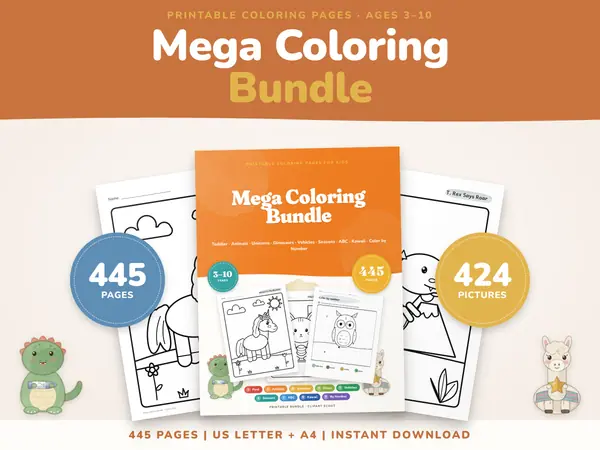
Ver el precio y comprar en Etsy445 pagesUS Letter + A4Ages 3–10English
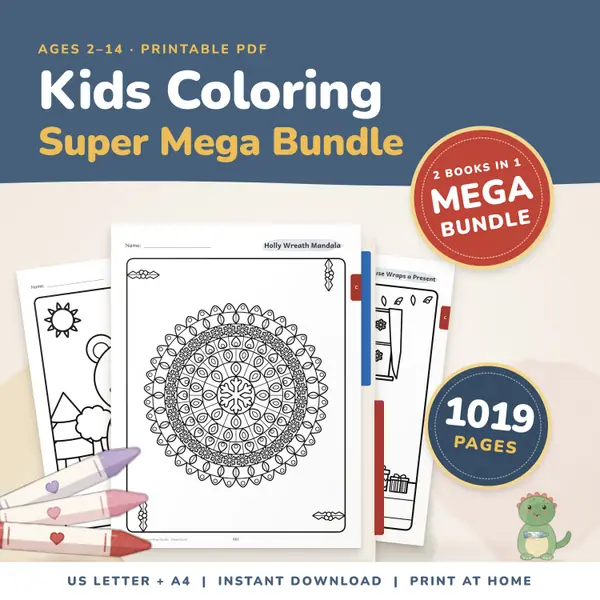
Ver el precio y comprar en Etsy1,019 pagesUS Letter + A4Ages 2–14English
Ver el precio y comprar en EtsyLos más comunes son dog (perro), cat (gato), cow (vaca), horse (caballo), pig (cerdo), sheep (oveja), lion (león), elephant (elefante), monkey (mono) y fish (pez). La lista de esta página tiene los demás, con audio.
Se dice pet: “My pet is a cat”. La palabra mascot significa otra cosa: es el personaje de un equipo o de una marca. Los animales de casa más comunes son dog, cat, rabbit, hamster, parrot y turtle.
Mouse hace mice. Sheep y deer se quedan iguales (one sheep, two sheep). Fish suele quedarse igual (one fish, two fish). Son plurales irregulares, y conviene enseñarlos con un dibujo de varios animales.
Una sugerencia: los de casa y los de granja (dog, cat, cow, horse, pig, duck), porque el niño los conoce bien. Después se añaden los salvajes (lion, elephant, monkey) y por último los del mar y los insectos.
Docentes y familias pueden enlazar esta página. Copia la dirección o el enlace ya preparado.